



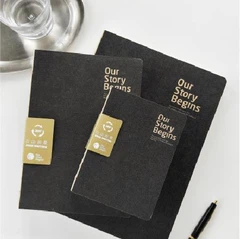

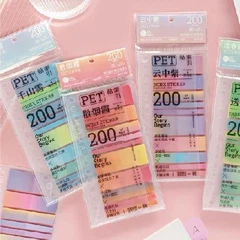



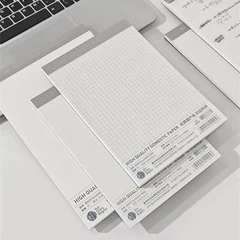


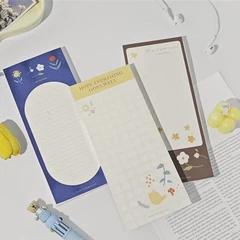


1. Wire preset, leave margins
When you're ready to work on a magazine, the first step in opening your typesetting software is to set up the wires and leave margins in advance. Isn't it very similar to the four blank spaces in the inner pages that we are familiar with?
2. Collect materials and conceive structures
In order for readers to turn to this page and understand the content in the fastest time, it is necessary for us to be able to arrange the collected materials in the magazine in an optimal way, and determine the main and subheadings, secondary text and related illustrations. If necessary, you can also change the font size, color contrast to reflect the order of the title, and combine the text content to set the style.
This is also the step when we spend a long time thinking about the handbook. Clarify the style of your page, what to write on it, what colors of pens need to be used, what style of tape, stickers, etc., when writing, whether to write block letters, or cute circles, or self-creation of random style?
3. Determine the style and plan the layout
Once the style is set, the material elements required in the publication are listed, and then the layout is split to determine the layout type. The conventional layout types include full layout, upper and lower cutting type, left and right separation type, central axis type, curve type, oblique type, symmetrical type, center of gravity type, triangle type, etc.
4. Distribute materials reasonably
After determining the style and layout, conduct content analysis to reasonably place the collected and sorted material elements, so that the whole layout presents a complete picture sense.
When making a handbook, we should also have a global concept, and don't take it for granted that these materials are all good-looking, so we put them all into one page.
5. Typesetting of the text content
Paragraph formatting is the key to the layout of the magazine's body content. Paragraph spacing, line spacing, word spacing, first line indentation, and page margins are all details that cannot be ignored.
It's not so troublesome to make a handbook, but we also need to think about how much more text we need to add to the layout of the material to make it look more divided?
6. The layout has a sense of rhythm and re-processing the details
For magazines, in order to ensure the look and feel, after the layout is completed, it is necessary to repeatedly check the layout and deal with the details, and realize the harmony and unity of the layout through the fine-tuning of the overall structure and local adjustments. For the handbook, the first few steps are completed, and this page of the handbook is also completed.